

Introduction
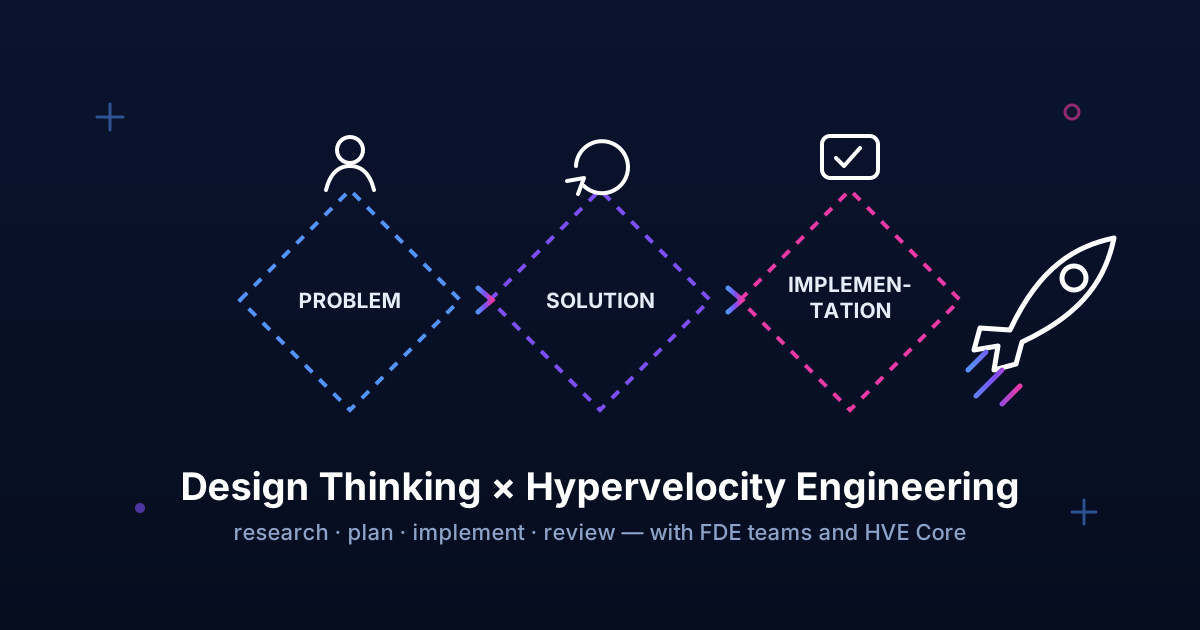
Most delivery failures aren't engineering failures — they're alignment failures: the wrong problem, solved beautifully. Design thinking exists to prevent that. Hypervelocity Engineering (HVE) exists to make the right solution arrive fast enough to matter. And the Forward Deployed Engineer (FDE) motion exists to make sure both happen inside the client's reality, not in a vendor's bubble.
This post walks through how we implement design thinking using the FDE and HVE methodologies, structured by Microsoft's open-source HVE Core framework.
Design Thinking: Solve the Right Problem First
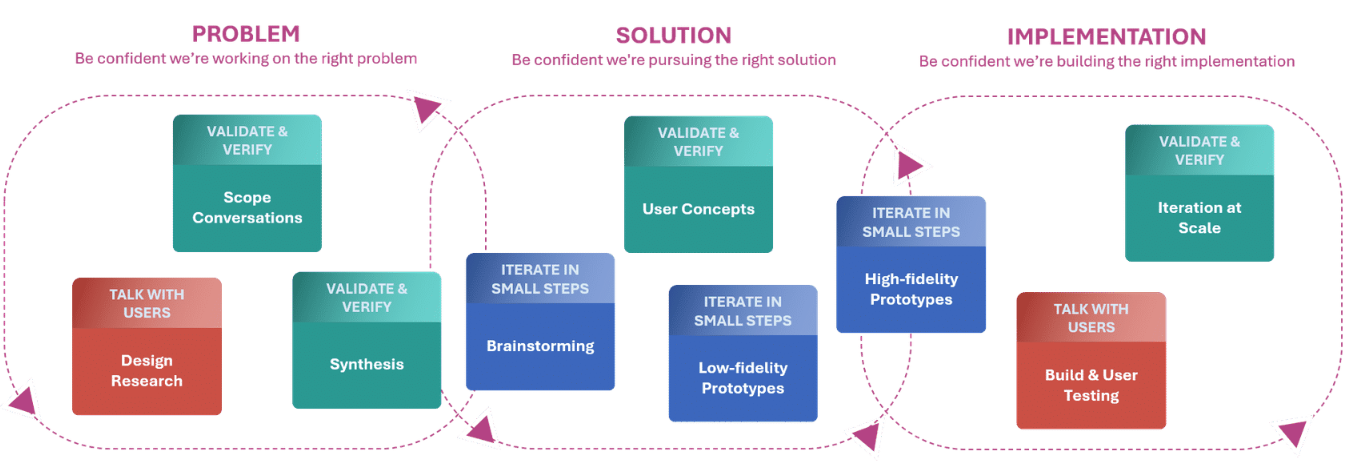
Design thinking is a non-linear, human-centered framework for creative problem-solving. It focuses on deeply understanding user needs, challenging assumptions, and redefining problems. Teams use it to generate innovative solutions through continuous cycles of building prototypes and gathering real-world user feedback.
In practice we run it as three overlapping confidence loops: be confident we're working on the right problem, pursuing the right solution, and building the right implementation. Every loop mixes the same three activity types — talking with users, validating and verifying, and iterating in small steps.
From Linear Phases to Continuous Iteration
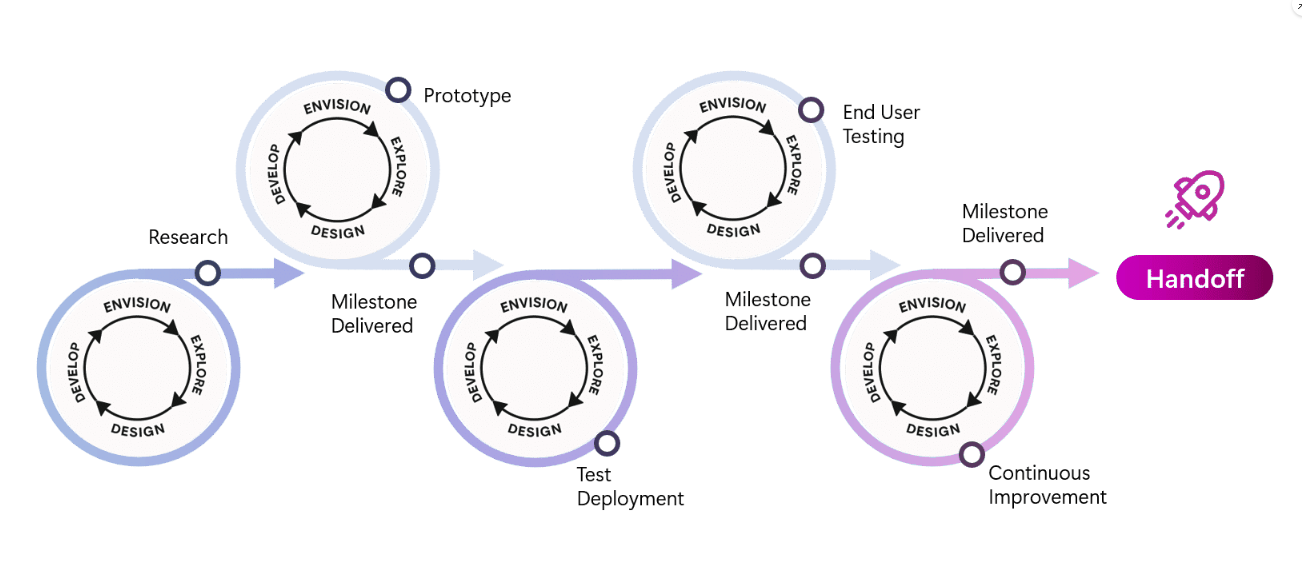
The delivery rhythm that falls out of this is not a waterfall. Envisioning, exploration, design, and development become continuous and iterative rather than linear: each engagement is a chain of short envision–explore–design–develop cycles, and every cycle ends with a delivered milestone — research findings, a prototype, a test deployment, end-user testing results, a continuous-improvement release — until handoff.
Teams keep momentum by completing shorter, smaller iterations in days or weeks rather than weeks or months, delivering increments of value faster.
Hypervelocity Engineering: The Speed Layer
Hypervelocity Engineering (HVE) is an AI-native software development methodology designed to drastically compress the engineering lifecycle — often from years to weeks. It goes beyond basic coding assistance by integrating specialized AI agents, solution accelerators, and reusable prompts into a standardized workflow.
That speed is what makes true design thinking affordable. When an iteration costs days instead of months, you can actually afford to test with real users, throw away what fails, and iterate — instead of defending the first design because too much was invested in it.
HVE Core: Structure Instead of Ad-Hoc Prompting
HVE Core is an open-source framework and workflow system by Microsoft designed to help teams ship faster by structuring and scaling the way they use AI — specifically GitHub Copilot. It replaces ad-hoc prompting with an end-to-end Research, Plan, Implement, Review (RPI) methodology: research the codebase and problem space first, produce a reviewable plan, implement against that plan, and review with both humans and AI in the loop.
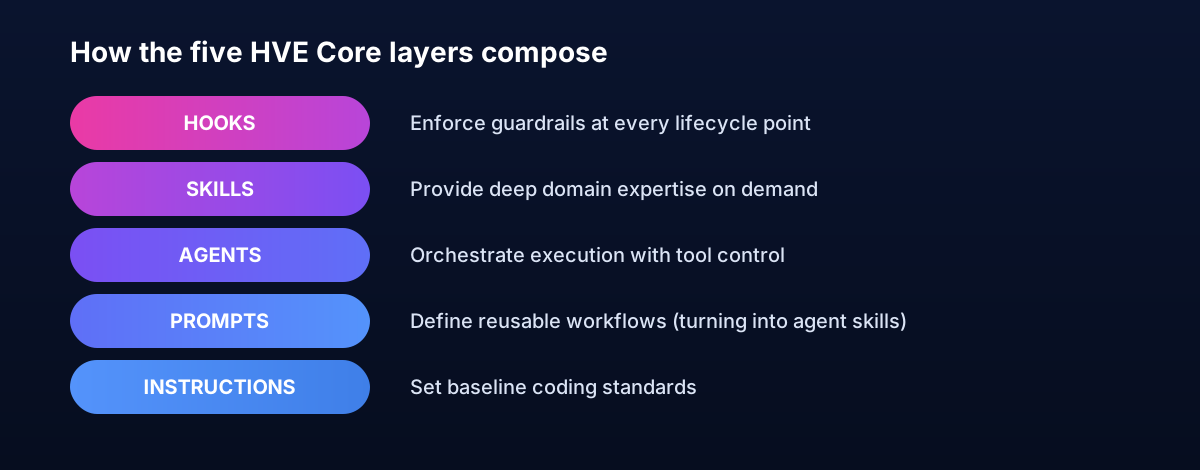
Under the hood, five composable layers turn that methodology into something a whole team can share rather than a private prompting style:
- Instructions set baseline coding standards every AI interaction inherits.
- Prompts define reusable workflows (progressively turning into agent skills).
- Agents orchestrate execution with tool control.
- Skills provide deep domain expertise on demand.
- Hooks enforce guardrails at every lifecycle point.
The FDE Motion: Engineering Embedded in the Client's World
A Forward Deployed Engineer (FDE) is a technical role where a software engineer embeds directly within client organizations. FDEs bridge the gap between core product development and bespoke client needs — often writing custom code and building agentic workflows on-site, where the real constraints, data, and users live.
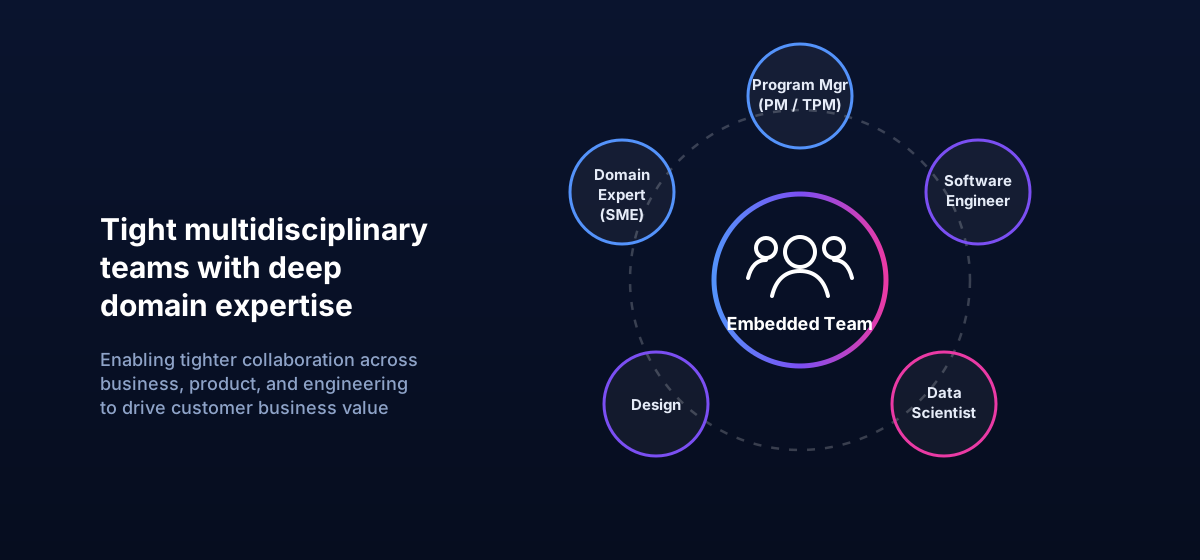
Design thinking demands constant contact with users; the FDE motion supplies it structurally. Instead of requirements traveling through layers of translation, a tight multidisciplinary team — program management, domain experts, software engineers, data science, and design — sits inside the problem, enabling tighter collaboration across business, product, and engineering to drive customer business value.
Prompt Engineering vs. Context Engineering
One distinction matters more than any tool choice when teams adopt AI-native delivery. Prompt engineering focuses on how you talk to a model — instructing it. Context engineering focuses on what information the model has access to when it generates responses: it is the craft of providing all the context required for the task to be plausibly solvable by the LLM.
HVE Core is, in essence, institutionalized context engineering. Instructions, skills, and the research phase of RPI exist to ensure the model always operates with the right standards, domain knowledge, and codebase understanding — and the FDE's embedded position is what keeps that context true to the client's actual environment.
How @RitS Puts It Together
In our engagements the three practices compose into one loop: design thinking decides what deserves to be built and keeps users in the room; the FDE motion embeds a multidisciplinary team where the problem lives; HVE — structured by HVE Core's RPI workflow — turns each iteration into working, reviewable software in days.
The result is delivery that is fast because it is disciplined, and innovative because it never loses contact with the humans it serves. That's design thinking at hypervelocity.
Want to explore what this could do for your business?
Talk to us